 Home
Services ▼
Concrete ▼
About
Gallery
Contact
The lots here are the biggest we work on. Shopping centers, medical campuses, industrial yards. None of them can afford to close, and none of them have to.
Nobody closes a shopping center for a day of paint. So we do not ask you to.
We break a large property into sections. Cone one row, stripe it, let it cure, move down. Customers keep parking, staff keeps working, and the lot is never fully out of service. Same approach for seal coating, half a lot at a time, nights and weekends when that is what the traffic calls for.
On a multi-acre lot the layout matters as much as the paint. Stall counts, drive aisles wide enough for a delivery truck and a fire lane, and the right number of accessible spaces and access aisles for the size of the property. We check that against current standards before anybody opens a paint can.
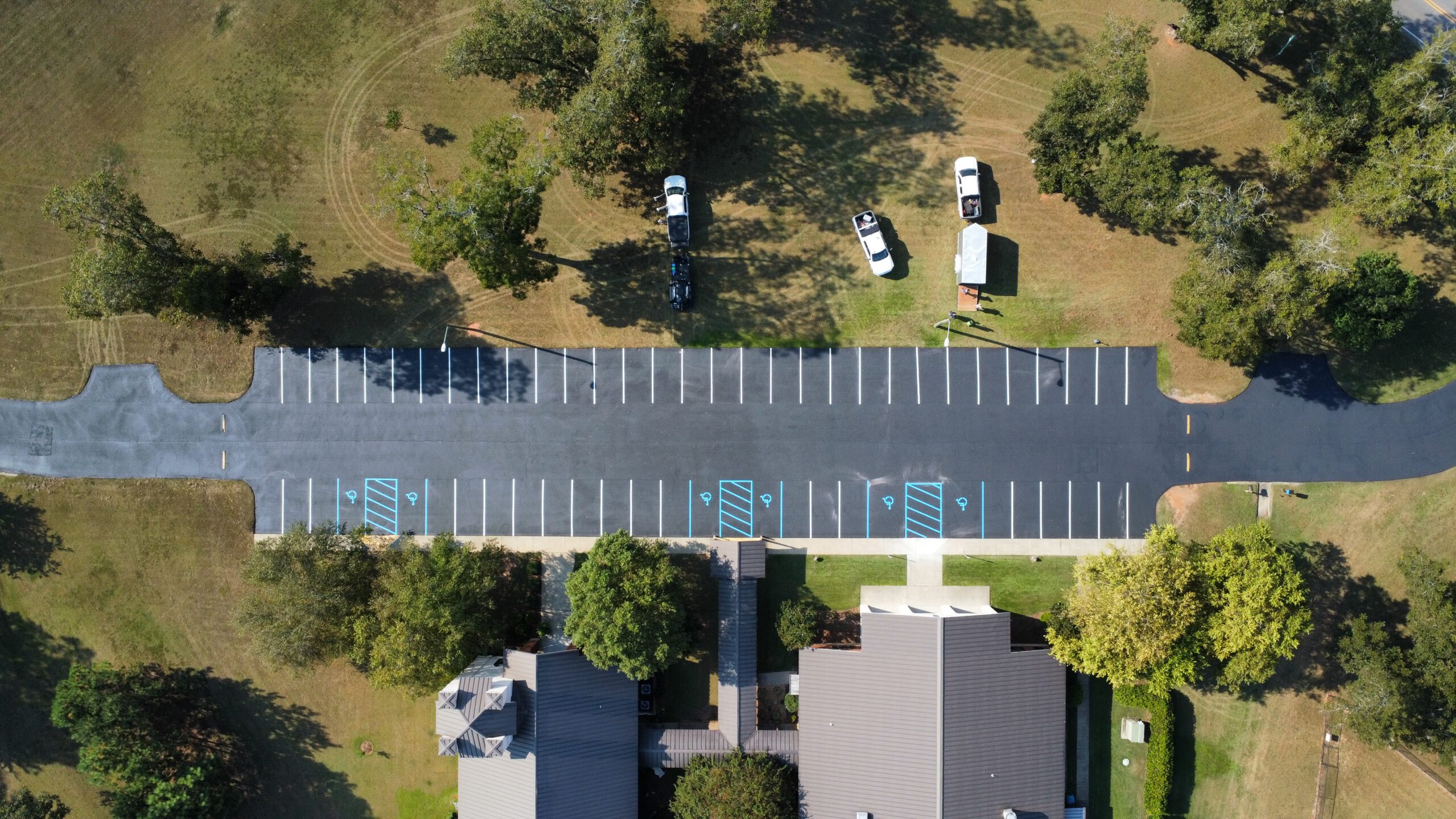
Same lot, same day, straight off the drone. All of these are ours.
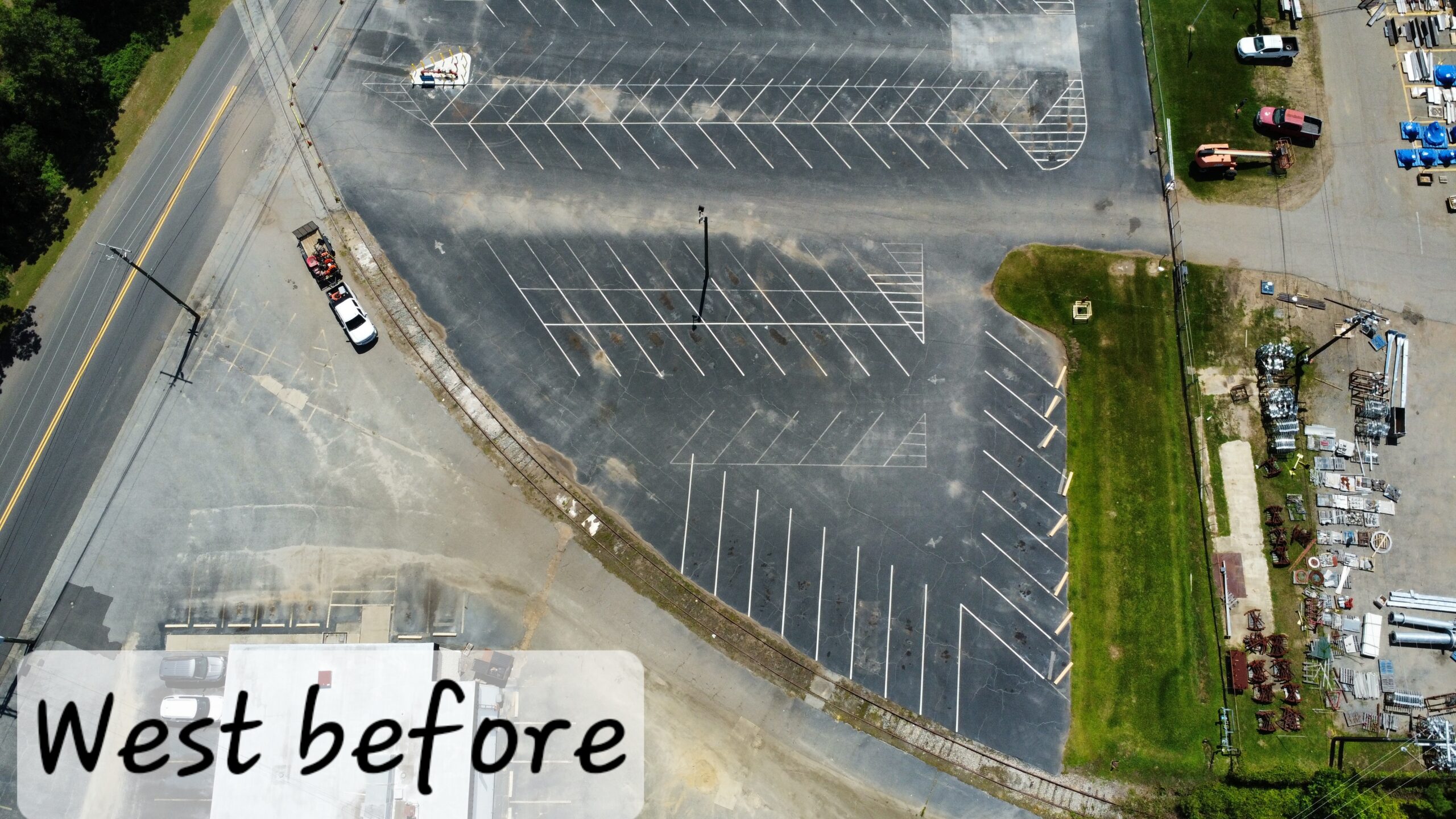
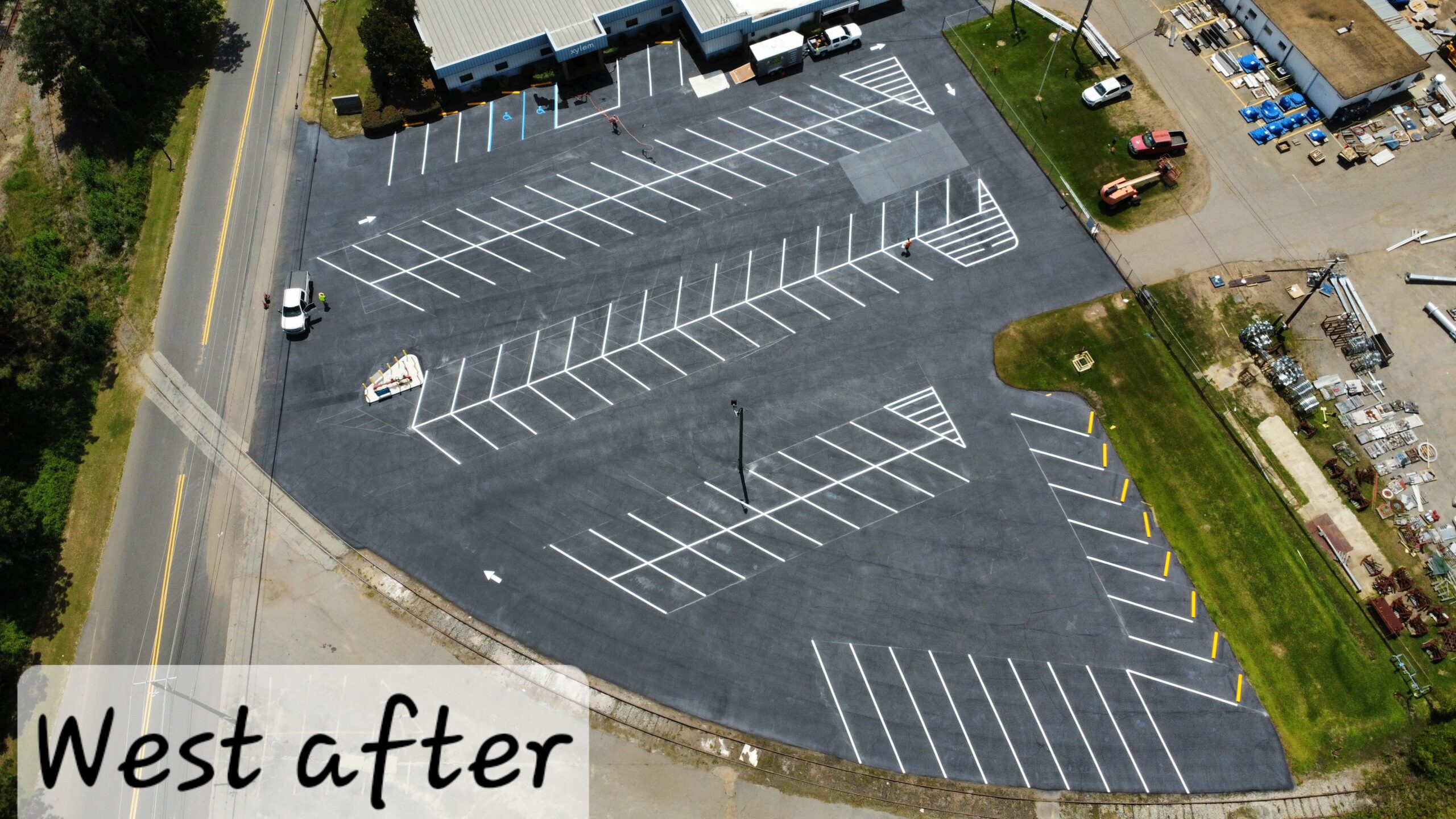
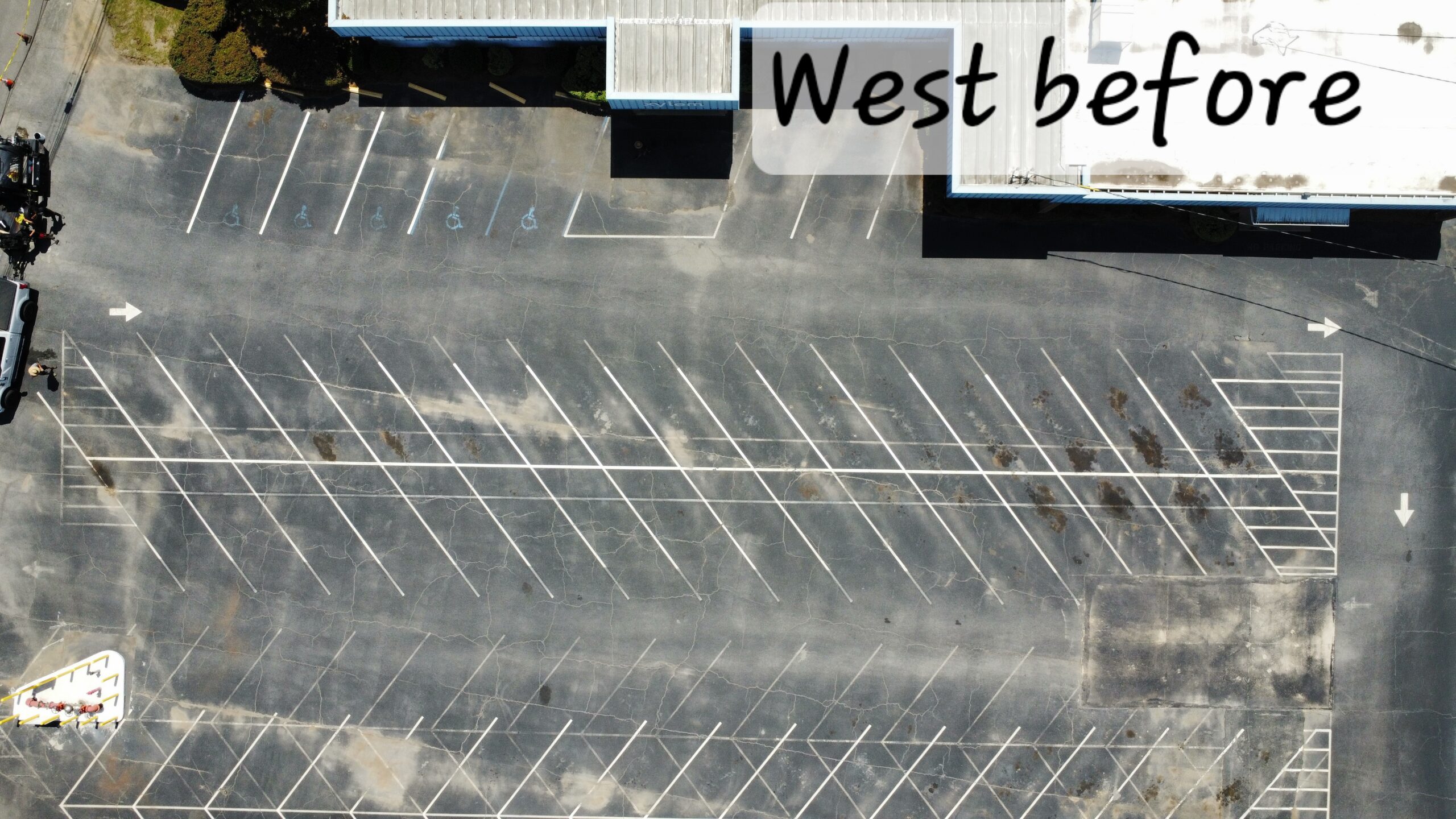
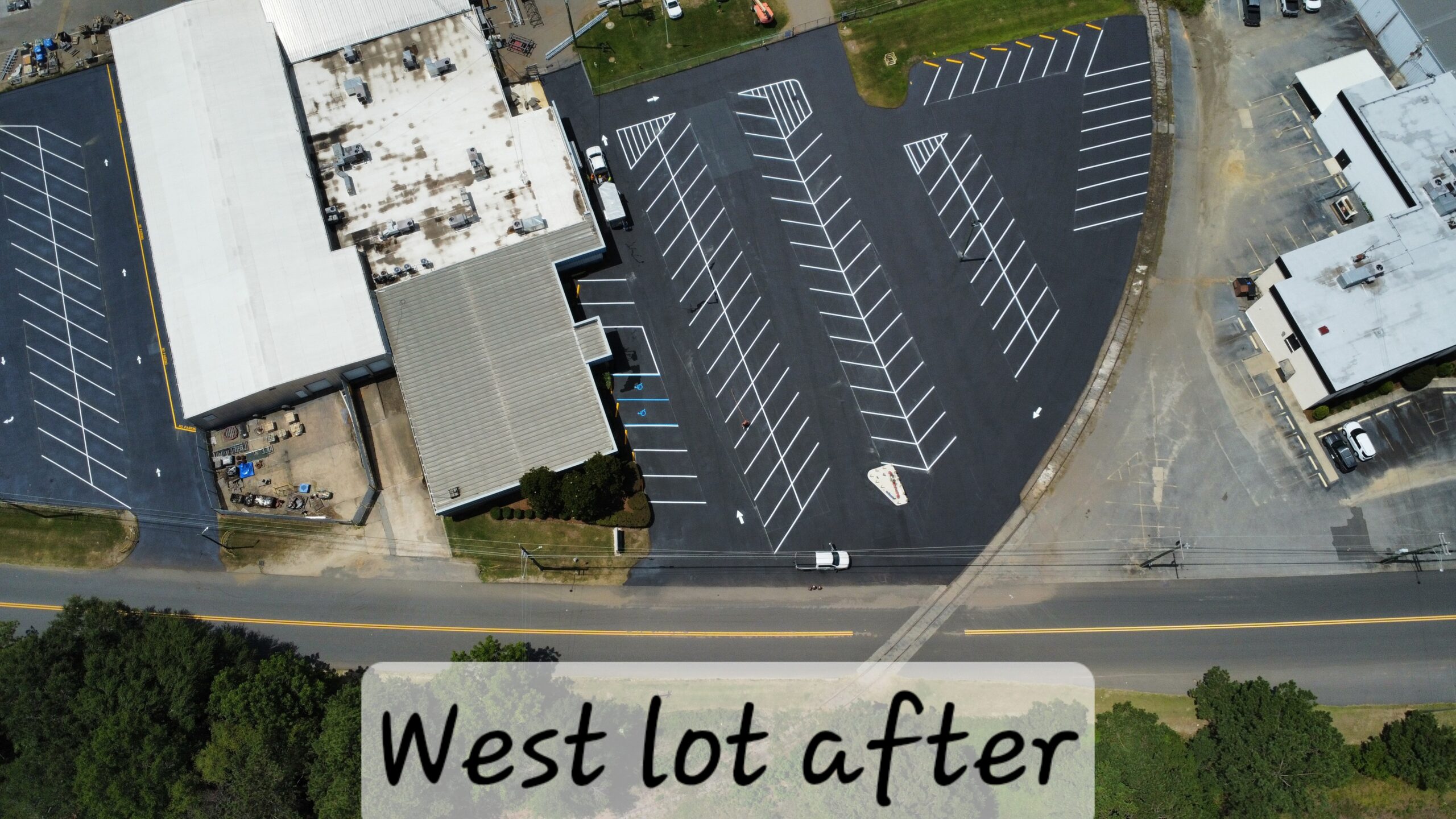
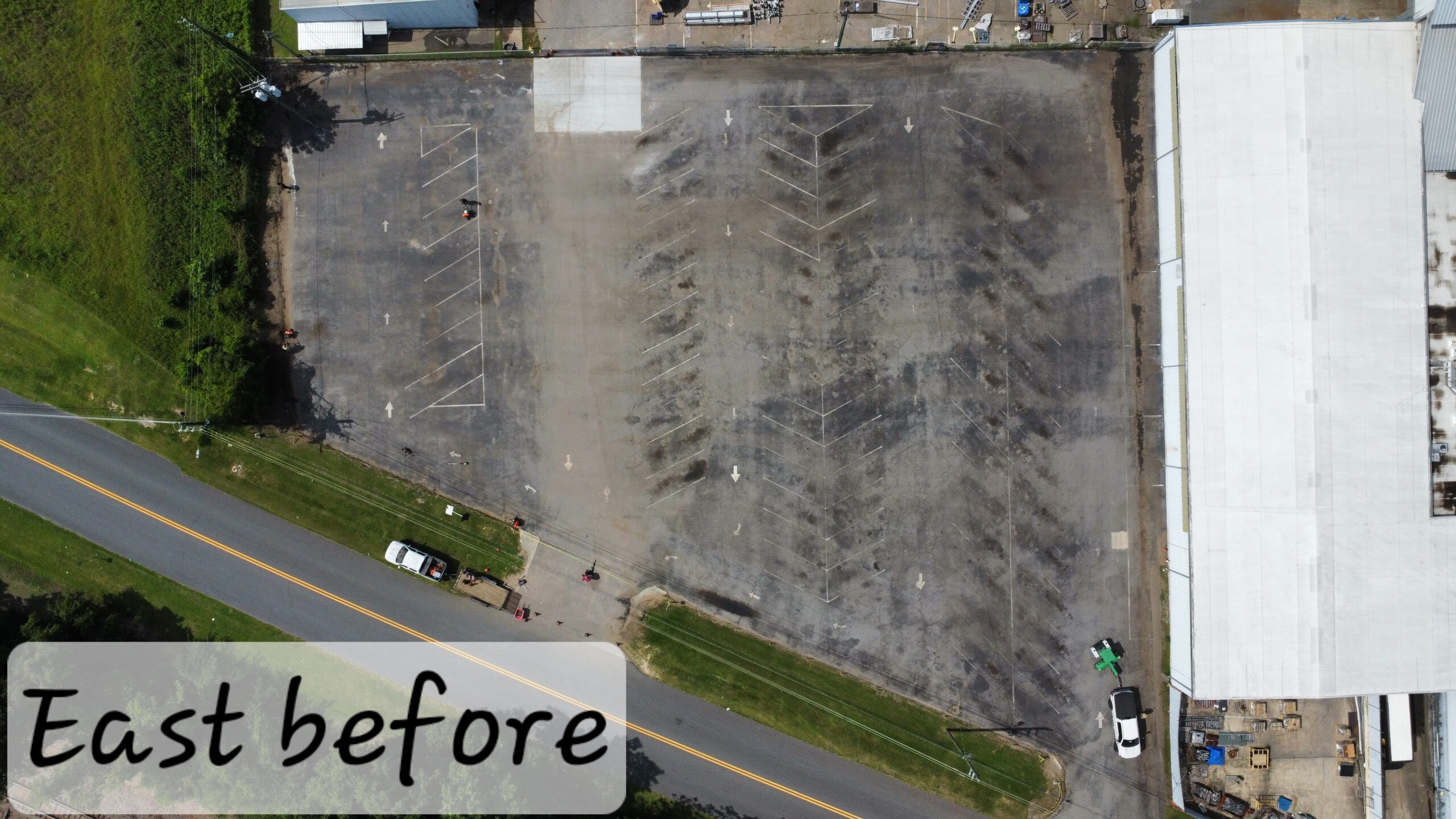
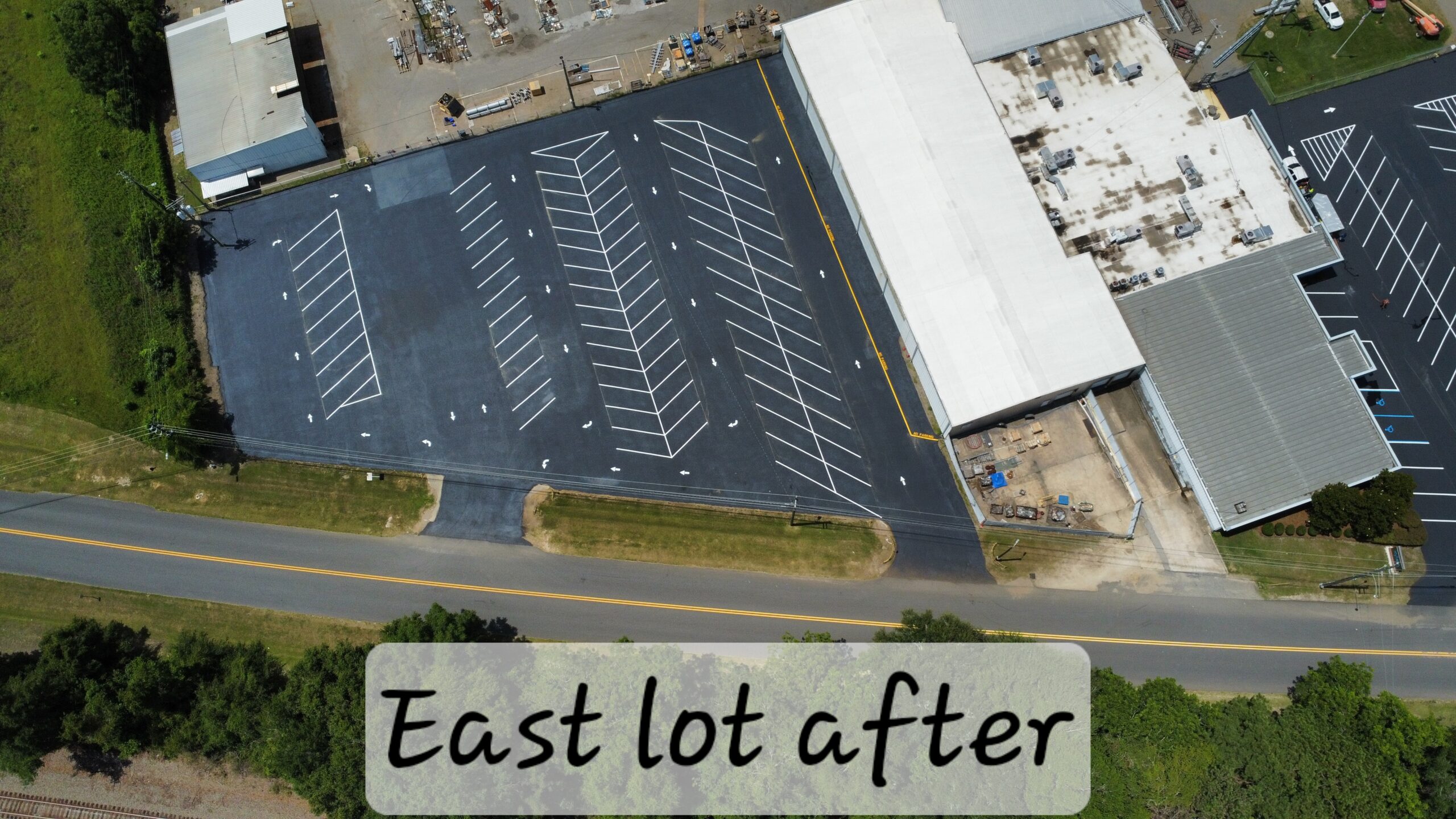

Full restripes and new layouts for shopping centers, campuses and municipal lots, with accurate stall counts all the way across.
Reflective bead traffic paint on the whole lot, not just the front rows. The back of a lot is where people get lost and where cars get scraped.

If the surface is grey and oxidized with scattered cracking but the base is still sound, crack sealing and a seal coat buy you years for a fraction of a repave.
If you have alligator cracking, sinking, or spots that fail again right after they are fixed, that is base failure and it needs patching or milling. We will tell you which one you are actually looking at.
Hot pour sealant across long drive lanes before storm water reaches the base.
Accessible space counts scaled to your total stalls, with aisles and signage.
Fire lane, stop, directional and handicap signs across large multi-row lots.
Concrete or rubber, set where cars keep drifting into walkways.
Storefront walkways, dock aprons and stained pavement cleaned before new work.
Curb and gutter, sidewalks, ADA ramps, slabs and pads, poured by the same crew that handles the asphalt. See concrete
We walk the property, count stalls, check accessible parking against current requirements and flag the pavement that needs repair before paint.
A written quote plus a section by section schedule showing which rows close when, so tenants and customers are never guessing.
Crews run at your quietest hours, and every phase is documented with drone photos before and after.
Yes. We break the lot into sections, cone and stripe one at a time, and leave the rest open the whole time. For the busiest centers we run nights or early mornings so finished sections are cured and open before customers show up.
It scales with your total stall count. A 25 space lot needs at least one accessible space, 26 to 50 needs two, 51 to 75 needs three, and so on, with at least one in every six accessible spaces being van accessible. We check your counts against current ADA standards before we lay the lot out.
Regularly. Retail, medical and industrial properties in Albany are most of the reason. Tell us the hours your lot is quietest and we build the schedule around them.
If the surface is oxidized and grey with scattered cracking but the base is sound, crack sealing and seal coating will buy you years for a fraction of the cost. Alligator cracking, sinking, or areas that fail again right after repair mean base failure, and that needs patching or milling instead.
Dougherty County and the towns around it, including Leesburg, Putney, Sasser, Sylvester, Camilla and Dawson. We will travel up to 100 miles past our Norman Park shop for the right job.
Albany, Leesburg, Putney, Sasser, Sylvester, Camilla, Dawson and the surrounding towns. We will travel up to 100 miles past Norman Park for the right job, which covers most of South and Mid Georgia, North Florida and Southeast Alabama.
Send the property address and we will measure the lot and put a phase plan and a price in writing. No obligation, and you hear back inside 24 hours.