 Home
Services ▼
Concrete ▼
About
Gallery
Contact
Building slabs, aprons, dumpster pads, equipment pads and bollards, poured to the thickness and mix on your plan set. Then we pave and stripe the asphalt around them.
A pad that holds a loaded truck is not the same pour as a pad that holds a car. Most of the failures we get called out to look at were priced like the second one.
We grade and compact the base first, set the forms, tie the steel, and pour to the thickness the job calls for. Thickened edges where a slab needs them. Control joints cut on time instead of two days later when the cracks have already picked their own path.
General contractors, developers, industrial and ag facilities, property managers. If it is on a plan set we build it to the plan set. If there is no plan, we measure the site and tell you what it needs.
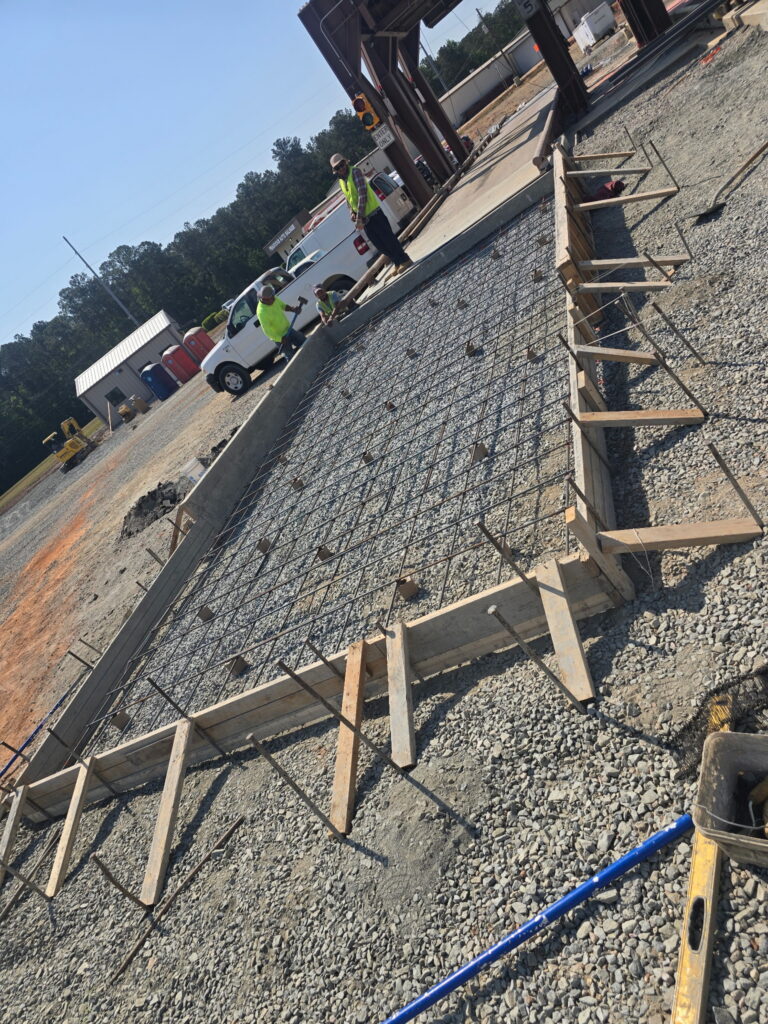
Photos off our own job sites.
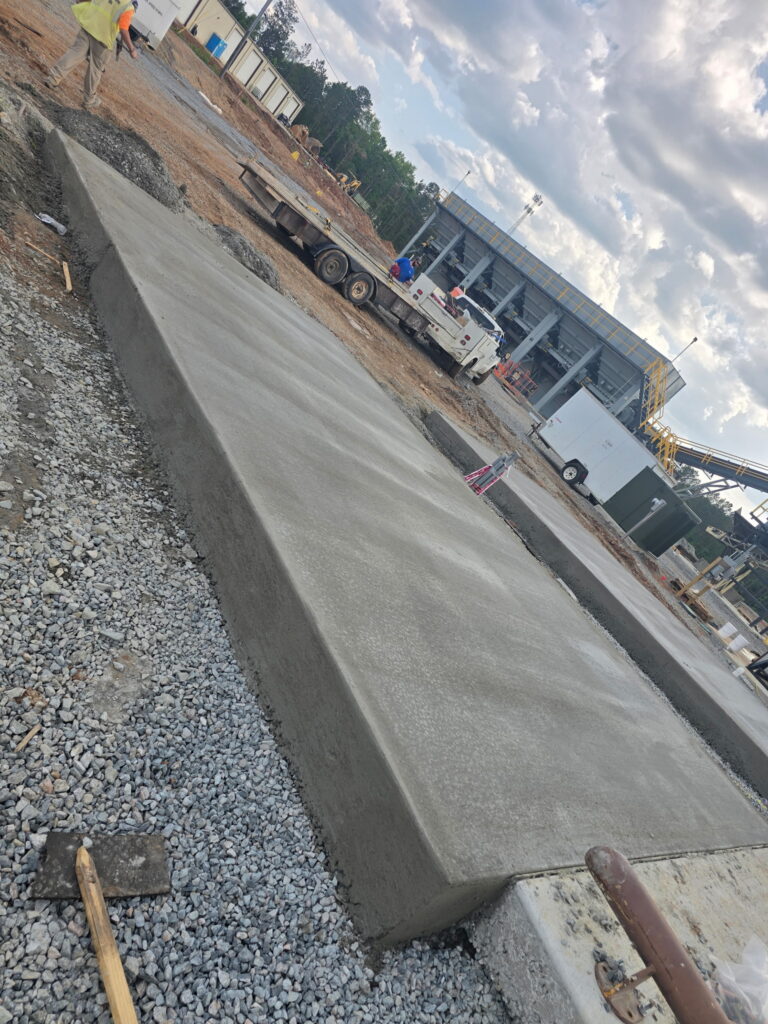
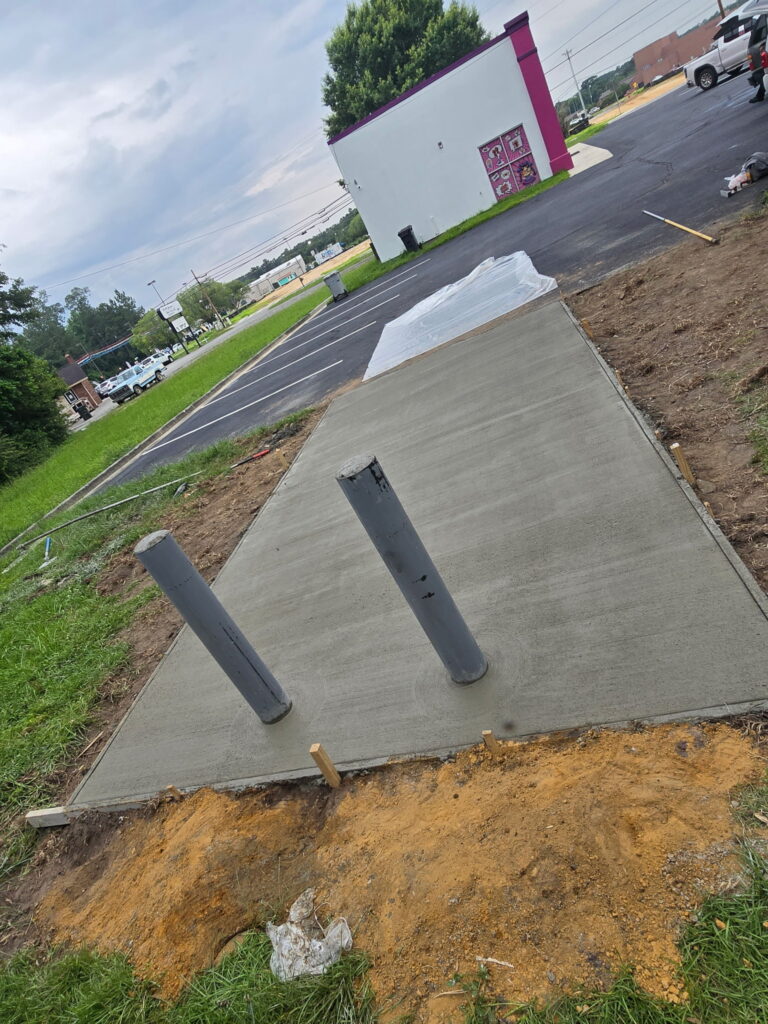
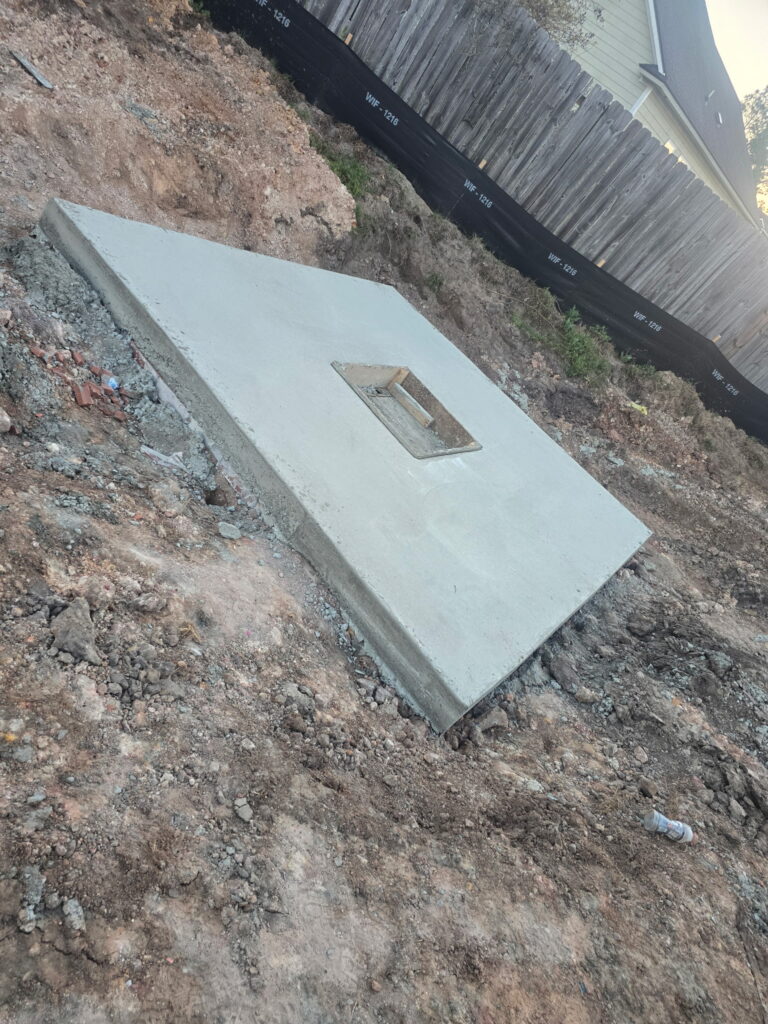

Slab on grade for new buildings, additions, shops and warehouses. Approach aprons and dock aprons where the trucks come in and the pavement takes the worst of it.
Base prep, vapor barrier where the plan calls for it, reinforcement, placement, finish and cure. We saw the joints on schedule so the slab cracks where we put the line instead of wherever it wants.
Dumpster pads take a fully loaded truck twice a week, so they get built thicker and reinforced instead of poured like a sidewalk. Same thinking on generator, transformer, condenser and tank pads.
Bollards set, filled and anchored at doors, docks, storefronts and fuel islands, before the pad goes down rather than cored in afterward.
Light pole bases, sign footings and equipment foundations with the anchor bolts or sleeves set to template instead of guessed at.
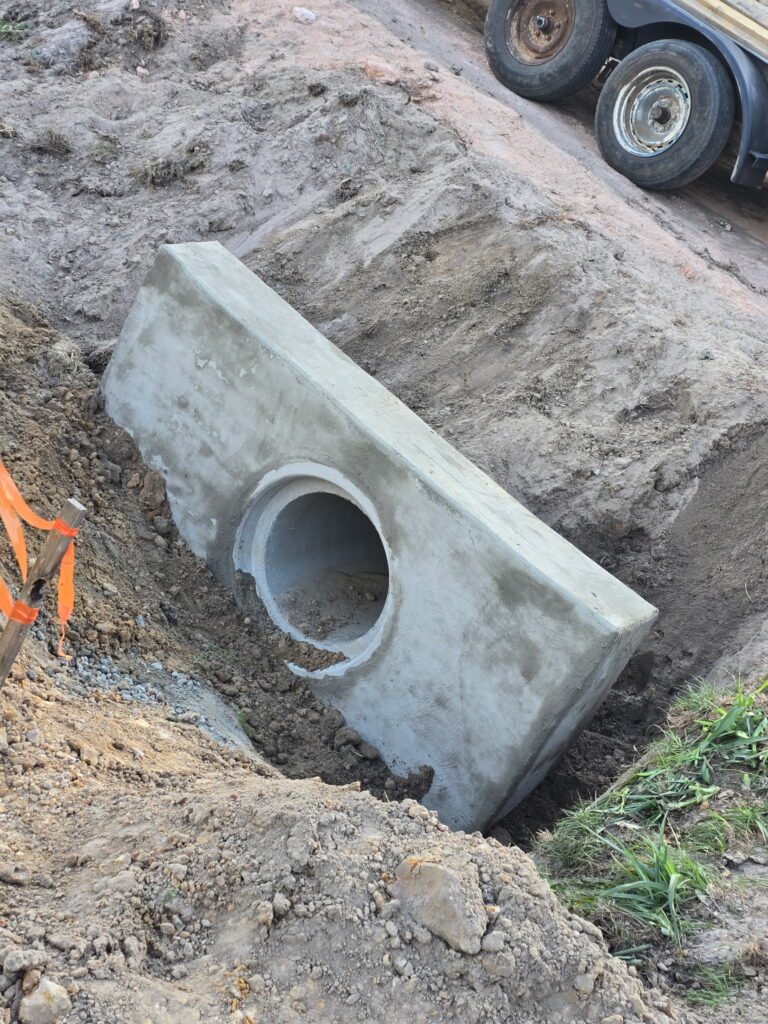
Precast boxes and structures set, leveled and grouted, and the flatwork poured back around them so there is no lip left for a tire or a toe to find.
Cracked, heaved or settled slabs saw cut out, hauled off and repoured on a base that will hold.
Concrete and asphalt put back over a cut, compacted in lifts so the patch does not sink.
Ramps, landings, truncated domes and accessible routes checked against current standards.
The lot and drive aisles around the slab, cut square, filled and compacted.
Once the concrete is cured, the asphalt gets sealed and the lot gets laid out and painted.
Stone base graded and compacted so water runs off the slab instead of standing on it.
Or we come measure the site. Either way the quote comes back with thickness, mix, reinforcement and finish spelled out.
Grade and compact, set forms to line and grade, tie the reinforcement, and have it ready before the truck rolls in.
Pour, screed, float, finish, joint and cure. Forms stripped and the site cleaned up before we pull off it.
It depends on what rolls across it and what the base is. A car park pad is one thing, a pad a loaded roll-off truck lands on is another, and a warehouse floor with racking is another again. Tell us the loads and we will spec it rather than pouring everything at the same depth and hoping.
Yes. Send the plan set and we quote to it, including mix, thickness, reinforcement and finish. If there is no plan, we measure the site and write the scope ourselves so you can see exactly what you are buying.
Rule of thumb, foot traffic in about a day, cars in about a week, loaded trucks closer to a month. Weather moves those numbers, so we give you the real ones for your pour before we leave.
Usually. We work section by section, keep an access route open, and schedule the pours around your hours so the docks and the doors keep working.
Both. Paving, patching, crack sealing, seal coating and striping are the other half of what we do, so the lot around the slab gets finished by the same contractor on the same schedule.
Out of Norman Park, so Moultrie, Tifton, Thomasville, Albany, Valdosta and everything between them. We will travel up to 100 miles past the shop for the right job.
Send the plans or tell us what is going on the site. We will come look and give you a straight price, usually inside 24 hours.