 Home
Services ▼
Concrete ▼
About
Gallery
Contact
Curb and gutter, valley gutter, sidewalk, ADA ramps, headwalls, catch basins and junction boxes. Poured to detail, with traffic control set up before anyone steps in the road.
Curb holds the pavement edge together and tells the water where to go. When it fails, the asphalt beside it starts failing next.
We pour curb and gutter, valley gutter, sidewalk, and the ADA ramps and landings that tie a walk into a crossing. We also build the structures the water runs into: headwalls, endwalls, catch basins, junction boxes and pipe collars, cast in place or set precast and grouted.
It is the work that has to line up with a detail sheet and hold a grade, and it usually has to happen with traffic still moving past it. Drums, cones and tape go out before the forms do.

Photos off our own job sites.

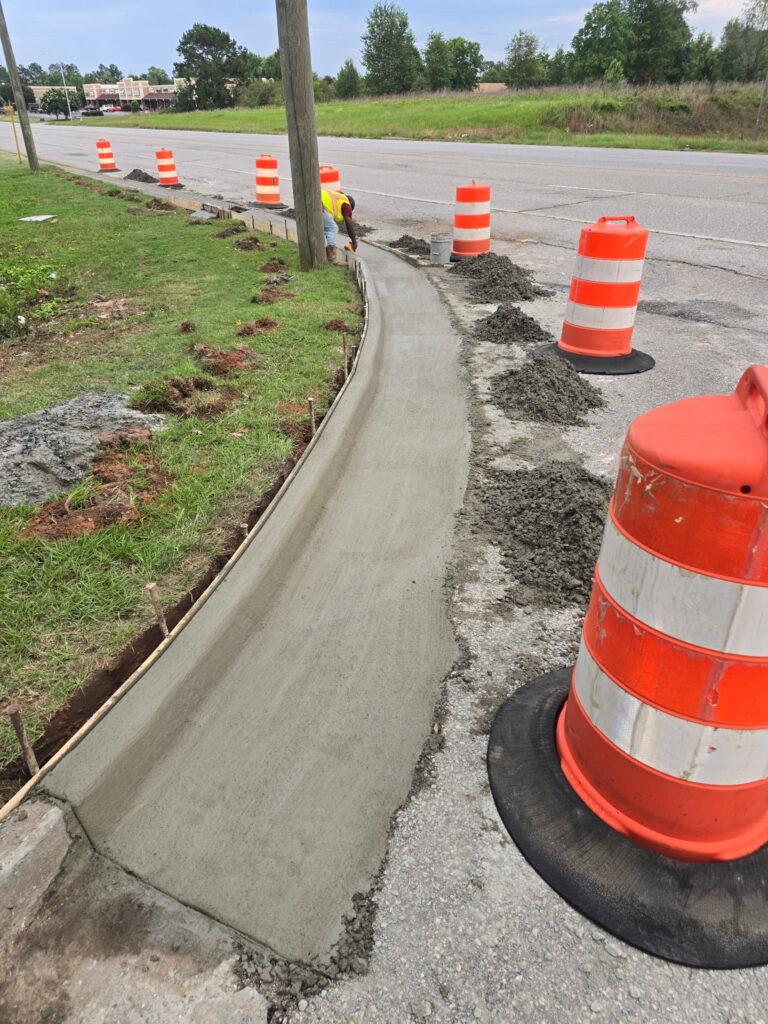

Standard curb and gutter, valley gutter, ribbon curb and header curb, formed to line and grade so water runs where the plan says it runs instead of standing against the pavement.
New frontage, replacement sections where a curb has been broken up by trucks, and tie-ins to existing curb that actually match the profile.
Sidewalk, connecting walks, landings and curb ramps with truncated dome panels, built to current ADA slopes and widths rather than close enough.
We also cut out and replace the trip hazards a property has already been cited for, and grind or replace where a root has lifted a panel.
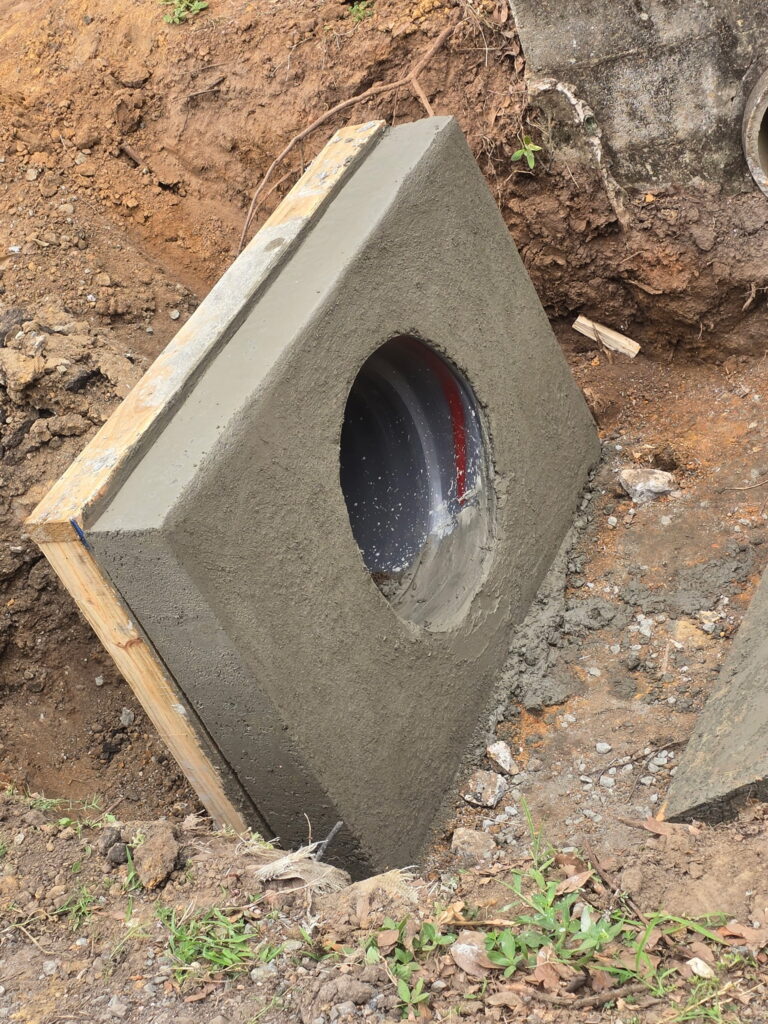
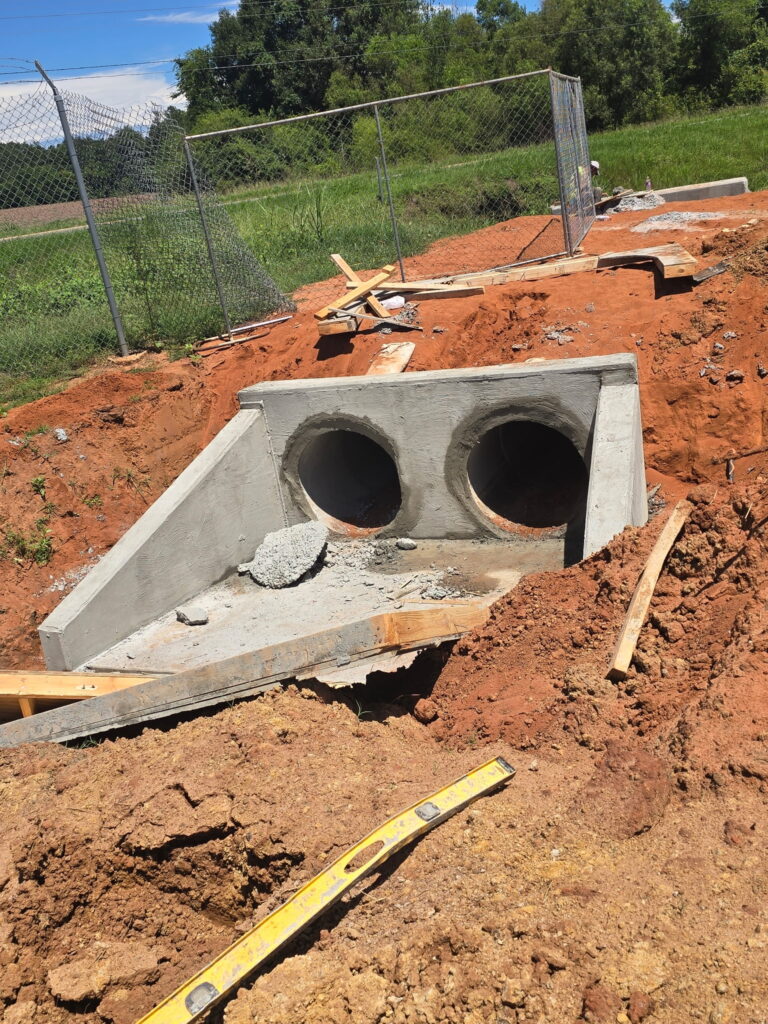
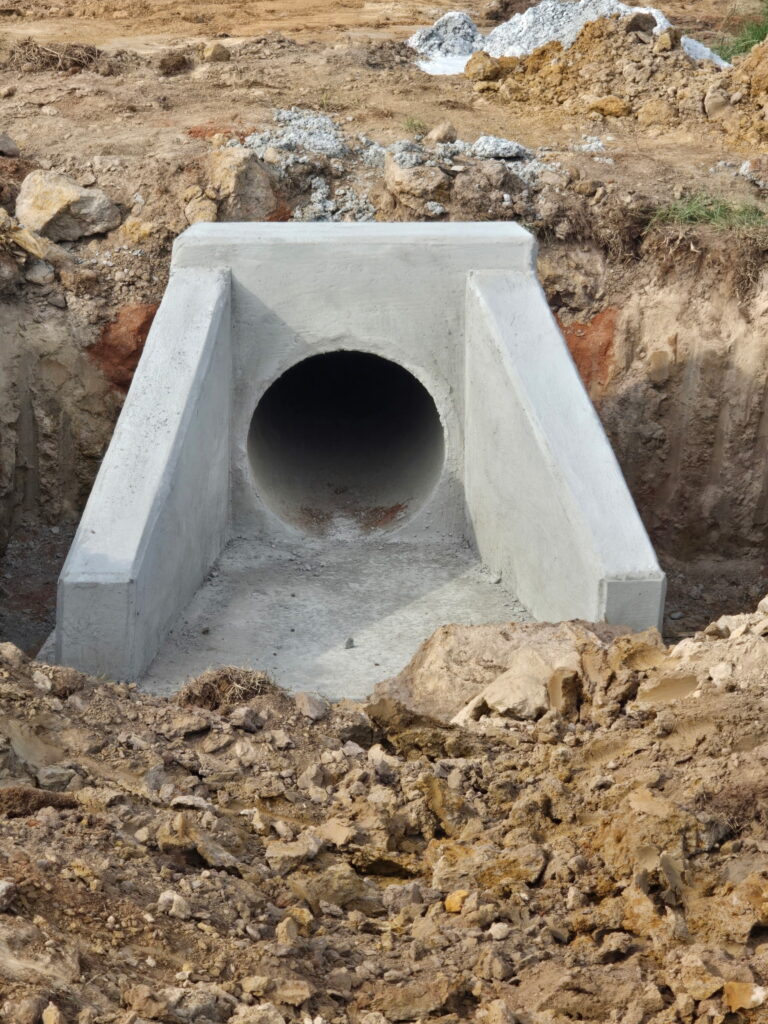
Headwalls, endwalls and wingwalls at culvert crossings. Catch basins, drop inlets, junction boxes and pipe collars, cast in place or set precast and grouted tight to the pipe.
Then the flatwork and the pavement poured and paved back around them so there is no lip left at the edge.
Concrete and asphalt put back over a cut around a manhole or valve, compacted in lifts so it does not settle into a dip.
Drums, cones, signs and tape set before the work starts, and a lane kept open where one has to stay open.
Broken curb, heaved walk and failed structures saw cut out, hauled off and rebuilt.
Grade and base pulled to line so the structure and the flatwork sit where they belong.
Crosswalks, stop bars, arrows and lane lines painted once the concrete is cured.
Pavement cut, matched and compacted against new curb so the joint does not ravel out.
On site, free. We check grade, drainage and how traffic moves past it, and quote to your detail sheet if you have one.
Drums and signs out first. Then saw cutting, removal, base, and forms set to line and grade.
Place, finish, joint and cure, strip the forms, backfill and clean up so the lane or the walk opens again.
Yes. Send the detail and we quote to it, including section, reinforcement, joint spacing and finish. If the work is on a city or county right of way, tell us who is inspecting it and we will build to what they are going to look for.
Most of the time. We set traffic control, work in sections, and keep a lane or an access route open. Where a full closure is the only safe way, we say so up front and schedule it for the slowest part of the day.
Both, depending on the crossing, the pipe and the schedule. Precast goes in fast where it fits the detail. Cast in place is the answer when the geometry is odd or the structure has to be tied into something that already exists.
If it is a small lift from a root or a settled joint, grinding is often enough and it is a lot cheaper. If the panel is cracked through, spalled, or the slope is out of ADA range, grinding just leaves you a smoother problem. We will tell you which one you have.
Rule of thumb, foot traffic in about a day, cars in about a week, loaded trucks closer to a month. Weather moves those numbers, so we give you the real ones for your pour before we leave the site.
Out of Norman Park, so Moultrie, Tifton, Thomasville, Albany, Valdosta and everything between them. We will travel up to 100 miles past the shop for the right job.
Send the detail sheet or tell us what is broken. We will come look at it and give you a straight price, usually inside 24 hours.